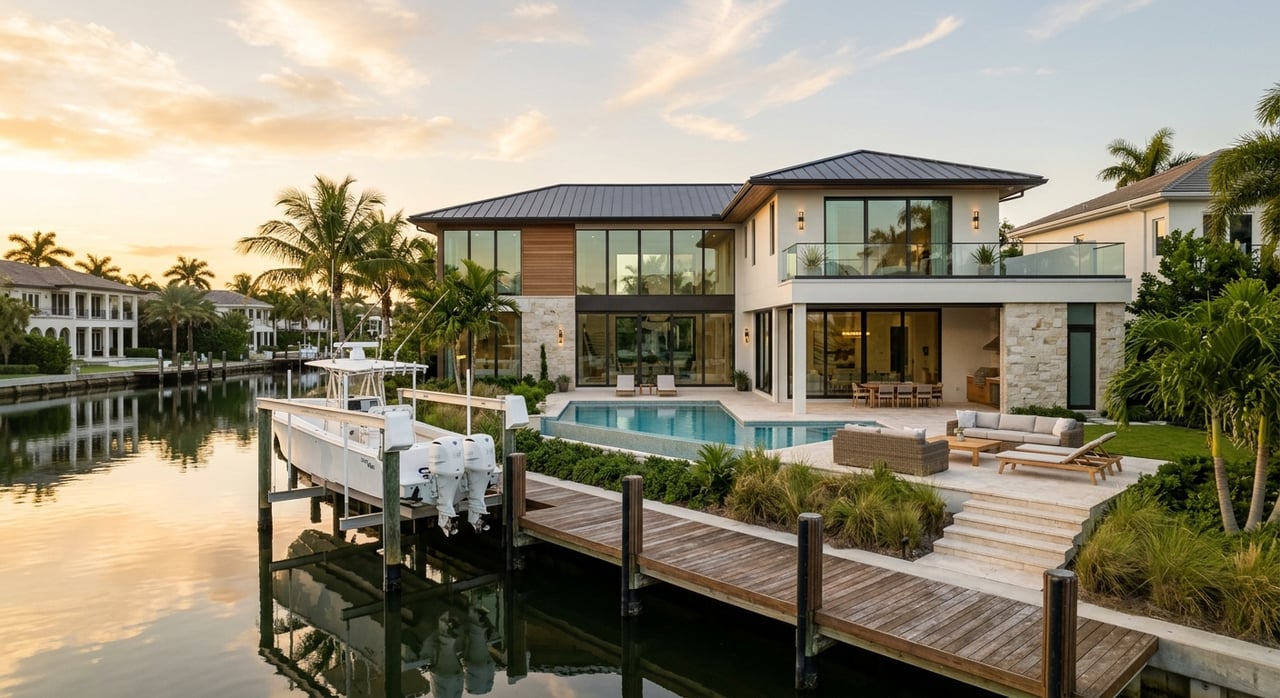
Wondering whether one Punta Gorda Isles canal home really offers the same boating lifestyle as another? In PGI, the answer is often no. Two homes can look nearly identical online, yet feel completely different once you factor in the water route, depth, bridge clearance, and time to reach Charlotte Harbor. If you are buying with a boat in mind, understanding canal access can help you avoid costly surprises and choose a property that truly fits how you want to live. Let’s dive in.
Why canal access in PGI is more nuanced
Punta Gorda’s waterfront system is extensive. The city says it maintains more than 50 miles of residential canals, while the Punta Gorda Isles canal district is responsible for 91 miles of seawall and dredging 45 miles of canals and inlets. The city also describes most of PGI as having deep, wide canals with no fixed bridges, which is one reason the area draws so much attention from waterfront buyers.
Still, canal access in PGI is not one-size-fits-all. City code identifies multiple access channels and inlets, including Ponce de Leon, Pompano, Bass, Snook, and Tarpon. Each route can come with different speed-zone rules and dock configuration limits, so the real question is not just whether a home is on a canal, but how that specific lot works on the water.
What buyers should check first
When you are comparing waterfront homes in Punta Gorda Isles, three details tend to shape day-to-day boating use the most. They affect how easily you can leave the dock, what kind of vessel makes sense for the property, and how convenient ownership feels over time.
Canal depth and boat draft
One of the biggest practical questions is whether your boat has enough water at the dock and along the full route out. NOAA’s maintained-channel data notes that silting is always possible and advises checking with local authorities for controlling depth. The city also says its canal maintenance division inspects canal depths and channel markers, performs annual seawall assessments, and can support dockside maintenance dredging under city permits.
That means you should verify depth for the exact lot and canal reach, not assume all PGI waterfront is the same. A neighborhood label may sound reassuring, but your actual boating experience depends on the water where your boat sits and the path it takes to open water.
Bridge height and air draft
Most of PGI is known for no fixed bridges, which matters a lot if you are shopping for sailboat access or have a taller vessel. Even so, route details still matter. City code references special structure limits around areas such as Pompano, Bass, and Tarpon Inlets, and it specifically mentions the Bass Inlet Bridge waterway and the Tarpon Inlet Bridge.
For buyers looking beyond the immediate canal, NOAA’s Coast Pilot notes that the U.S. Route 41 bridge at Punta Gorda has two fixed spans with 45 feet of clearance. If your boat has a mast, tower, or hardtop, the right approach is to compare your air draft to the exact route from the dock to the waterway you plan to use. It is a route question, not just a neighborhood question.
Distance to open water
A home that appears close to Charlotte Harbor on a map may still take longer to reach open water than you expect. That is because speed regulation matters along with distance. City code lists idle-speed or slow-speed zones for Ponce de Leon Inlet, Pompano Inlet, Laishley Park Channel, Bass Inlet, and Snook Inlet.
In real life, this means your boating routine is shaped by both geography and local rules. A shorter route is not always a faster route, especially if the final stretch includes a no-wake segment.
Why route-specific access affects lifestyle
Buying waterfront is often about more than the view. It is about how easily the property supports the way you want to spend your time. If you picture quick sunset cruises, frequent harbor runs, or regular time on the water, then route efficiency becomes part of everyday convenience.
This is why two homes with similar photos, lot sizes, and canal frontage may not feel equal to a boater. One may offer a smoother path, fewer limitations, and easier dock use, while the other may require more planning every time you head out.
Resale value is about usability too
No one can promise future value, but usability tends to matter in waterfront resale. Based on the city’s description of PGI’s canal system, homes with features that are easier for boaters to live with, such as no-fixed-bridge routes, wider canals, and shorter trips to Charlotte Harbor, may appeal to a broader pool of waterfront buyers than homes with tighter access or more restrictive dock setups.
That is not a published city valuation rule. It is a practical lifestyle-and-liquidity inference. In simple terms, the easier a property is to use on the water, the easier it may be for future buyers to picture themselves enjoying it.
Seawall condition matters
Seawall condition is another major part of the waterfront ownership picture. The city funds canal districts through non-ad valorem assessments and says its annual seawall assessment records condition data in a GIS system to help prioritize maintenance, replacement, and long-term forecasting.
For you as a buyer, that makes seawall age, condition, and replacement history important ownership details. They are not background items to skim past. They can shape both maintenance expectations and long-term planning.
Dock and lift potential can change a lot
Not every canal lot allows the same kind of dock or lift setup. City code limits many single-family docks to 10 feet waterward from the seawall, allows larger dock configurations on wider canals, and applies tighter setbacks in certain inlet areas. It also requires special surveys or permits when a project falls outside standard rules.
So while a canal home may look ideal from the lanai, you still need to confirm whether the lot can support the dock, slip, or lift arrangement you want. A scenic canal and a highly functional canal are not always the same thing.
A smart due diligence checklist
If you are serious about buying in Punta Gorda Isles, a few targeted questions can help you compare homes more clearly.
- Identify the exact access route from the lot to Charlotte Harbor, including any idle-speed or slow-speed zones.
- Verify the current canal depth or a recent sounding for the specific area where your boat would dock.
- Compare your boat’s draft and air draft with the full route, not just the backyard canal.
- Ask whether canal width or inlet location could limit future dock, lift, or slip options.
- Review seawall condition, assessment history, and any signs that replacement work may be needed.
- Confirm with the city whether planned dock or lift improvements would require a special purpose survey or canal construction special permit.
How to compare two similar listings
When two PGI waterfront homes seem evenly matched, the water access details often tell the real story. One home may have a more practical route, fewer speed-related delays, and better long-term dock flexibility. The other may still be attractive, but less convenient for the way you want to boat.
This is where local, property-level guidance matters. A strong waterfront purchase decision is not just about the photos, the finishes, or the address. It is about how the property performs once you leave the seawall.
If you are thinking about buying in Punta Gorda Isles, taking the time to study canal access now can save you frustration later. The right home should support your lifestyle from day one, whether that means easier harbor access, the right depth for your boat, or confidence in the seawall and dock setup. For personalized guidance on PGI waterfront homes and what to look for lot by lot, connect with Miki Matrullo.
FAQs
What does canal access mean for a Punta Gorda Isles home?
- In Punta Gorda Isles, canal access means more than being on the water. You need to consider the exact route to Charlotte Harbor, canal depth, speed zones, bridge or clearance issues, and any dock or inlet restrictions that affect how the property functions for your boat.
Why should buyers verify canal depth in Punta Gorda Isles?
- Buyers should verify canal depth because silting can occur, and depth should be confirmed for the specific lot and canal reach. A general PGI waterfront label does not guarantee the right depth at the dock or along the route out.
Do all Punta Gorda Isles waterfront homes have the same boating access?
- No. City code identifies multiple access channels and inlets, and those routes can have different speed-zone rules and dock configuration limits. Two homes that look similar on land can offer very different boating experiences.
Why does distance to Charlotte Harbor matter for PGI buyers?
- Distance matters because it affects how long it takes to reach open water, but speed-regulated zones matter too. A home that looks close on a map may still involve a slower trip if part of the route is idle-speed or slow-speed only.
What should buyers review about a seawall in Punta Gorda Isles?
- Buyers should review the seawall’s age, condition, assessment history, and any replacement history. The city tracks seawall condition data, which makes seawall information an important part of evaluating waterfront ownership.
Can dock or lift plans be limited on a Punta Gorda Isles canal lot?
- Yes. City code sets limits on many single-family dock projections, allows larger configurations on wider canals, and applies tighter setbacks in some inlet areas. Some improvements may also require a special survey or permit.
