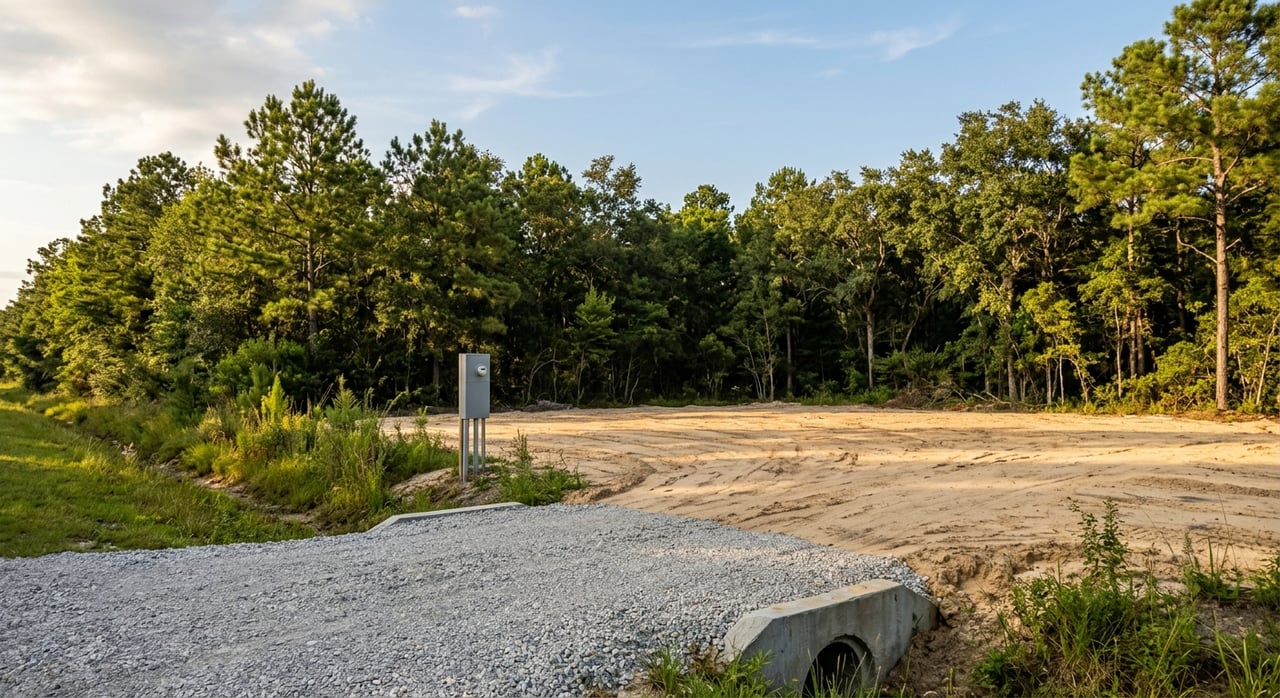
Thinking about buying land or creating a homestead in Arcadia? A beautiful piece of acreage can look like the perfect fit, but raw land often comes with more questions than a traditional home purchase. If you want to avoid costly surprises, the key is to verify the parcel’s rules, access, utilities, and building path before you close. Let’s dive in.
Start With Jurisdiction
One of the first things you need to confirm is whether the parcel is inside the City of Arcadia or in unincorporated DeSoto County. That single detail affects which planning department, zoning rules, and land development standards apply.
If the property is inside city limits, Arcadia’s Unified Land Development Code and city planning standards apply. If it is outside city limits, DeSoto County zoning and land development regulations control the review process. You should never assume a parcel can support a home, driveway, septic system, or accessory structures until that jurisdiction is confirmed.
Review Zoning Before You Offer
Acreage buyers often focus on size first, but zoning should come first. In DeSoto County, common rural agricultural districts include A-10 and A-5, which generally allow low-density residential use at one dwelling per 10 acres and one dwelling per 5 acres, respectively.
The county also has residential districts with different minimum lot sizes. For example, RSF zoning ranges from 43,560 square feet in RSF-1 down to 8,712 square feet in RSF-5. Those differences matter if you are planning a home build, a future split, or a more flexible long-term use.
Inside Arcadia city limits, the standards are different. The city’s single-family districts include minimum lot sizes such as 10,000 square feet in R-1A and 7,500 square feet in R-1B, so a city parcel should not be evaluated using county assumptions.
Ask Better Zoning Questions
Zoning review is about more than asking whether you can build a house. You also need to understand whether the parcel fits your actual plan.
Key questions to ask include:
- What is the current zoning?
- What is the future land use designation?
- What minimum lot size applies?
- What setbacks will affect home placement?
- Are accessory buildings allowed?
- Will the property support your intended home type?
- Are manufactured homes or agricultural uses allowed?
- Is future subdivision even possible?
DeSoto County GIS zoning and future land use maps are a useful starting point for parcel review in unincorporated areas. From there, a more detailed planning review can help you understand what the parcel can realistically support.
Confirm Legal Access Early
Access can make or break a land purchase. Before you move forward, confirm whether the parcel has legal access from a public road, a county-maintained road, or a private easement.
This matters because road status can affect maintenance, permitting, and future improvement costs. DeSoto County Engineering manages right-of-way permits, and county materials note that some rights-of-way are not county-maintained.
If you plan to add a driveway or do work in the right-of-way, permit requirements may apply. The county’s right-of-way permit process also requires utility locates and compliance with land development regulations, so this is not something you want to discover after closing.
Verify Water, Sewer, Well, and Septic
Utilities are never something to guess on with raw land. In Arcadia and DeSoto County, service availability can vary from parcel to parcel, even when nearby properties look similar.
DeSoto County Utilities serves unincorporated areas outside those serviced by the City of Arcadia. The city utility department provides drinking water, wastewater collection, and reclaimed water to city customers, and some parcels may cross between service areas, which means the correct utility sign-off matters.
You should also know that county water-management inventory information shows a mix of public water, private wells, sewer, and septic across DeSoto County. That is why a map pin or mailing address is not enough to confirm service.
If the Parcel Needs Septic
If the property will need septic, the DeSoto County health department handles permitting and inspection under DEP rules. The application package includes a site plan, site evaluation, system specification, and county forms.
The site evaluation looks at conditions such as soil and topography to determine whether the property can support an onsite sewage treatment and disposal system. For a homestead buyer, that is a major step because a failed septic path can completely change the usability of the land.
If the Parcel Needs a Well
If the property will need a private well, permitting also needs to be confirmed early. Southwest Florida Water Management District includes DeSoto County in its service area and requires a Well Construction Permit before a well is installed within the district.
That means your due diligence should include checking the well permit path before any drilling begins. If you are buying acreage with plans to build soon, this can help you avoid delays in your timeline.
Check Floodplain and Wetlands
Flood and drainage review is one of the most important parts of buying land in DeSoto County. County guidance states that everyone lives in a flood zone, flood zones are different from evacuation zones, and most homeowners insurance policies do not cover flood damage.
For unincorporated DeSoto County, the county participates in the National Flood Insurance Program and requires new or substantially improved buildings to be built at least one foot above base flood elevation. That can affect site design, fill needs, budget, and build strategy.
The county also allows buyers to request flood-zone information, wetlands presence, a flood hazard determination letter, and approximate base flood elevation for parcels in unincorporated areas. If you are considering raw land, this step should happen before you spend money on clearing, drainage work, or driveway planning.
Watch for Environmental Permits
Some site work may trigger additional environmental review. If your project affects wetlands, changes surface water flow, or could contribute to water pollution, Southwest Florida Water Management District environmental resource permitting can apply.
This is especially relevant for larger acreage projects that may involve fill, drainage improvements, ponds, or more extensive land disturbance. Even if the parcel looks usable at first glance, the permit path can shape what is practical.
Build Your Team Before Closing
Buying land is easier when you bring in the right professionals early. Depending on the parcel and your plans, that may include a surveyor, engineer, contractor, and the right utility or septic contacts.
DeSoto County’s residential permit checklist shows how much documentation may be needed for improvements or accessory structures. The checklist includes a complete permit application, approved zoning request and site plan, engineered building plans stamped by a Florida licensed engineer, and septic permit or utilities verification when applicable.
The county also states that incomplete permit applications will not be accepted. That is a strong reason to line up your survey, utility verification, septic or well questions, and contractor vetting before closing rather than after.
A Simple Arcadia Land Checklist
If you are buying land or a homestead property in Arcadia, these are the planning steps worth tackling first:
- Confirm whether the parcel is in the City of Arcadia or unincorporated DeSoto County.
- Review zoning, future land use, and minimum lot size.
- Verify legal access and road maintenance status.
- Confirm whether utilities are public, private, or unavailable.
- Check whether the site will need a well, septic system, or both.
- Request flood and wetlands information early.
- Review whether drainage, fill, or land disturbance could trigger extra permits.
- Talk with the right professionals before you finalize your purchase.
Why Due Diligence Matters
The right parcel can absolutely become the home site or homestead you have in mind. But in Arcadia, the smartest land buyers know that success is less about finding acreage and more about verifying the parcel’s jurisdiction, access, utilities, flood risk, and permit path.
When you slow down and check those details before closing, you protect your budget, your timeline, and your long-term plans. That kind of preparation can make your land purchase feel far more confident and far less stressful.
If you want experienced guidance as you explore land, homesites, or future homestead property in Southwest Florida, Miki Matrullo is here to help you move forward with clarity and confidence.
FAQs
What should you verify first when buying land in Arcadia?
- First, confirm whether the parcel is inside the City of Arcadia or in unincorporated DeSoto County, because different rules and planning systems apply.
What zoning matters most for rural land in DeSoto County?
- For rural acreage, A-10 and A-5 are key starting points, with general density standards of one dwelling per 10 acres in A-10 and one dwelling per 5 acres in A-5.
What utility questions should you ask before buying Arcadia land?
- You should confirm whether the parcel has access to public water and sewer or will need a private well, septic system, or both, since utility availability is parcel-specific.
What flood issues should you check for land in unincorporated DeSoto County?
- You should request flood-zone information, wetlands presence, flood hazard details, and approximate base flood elevation before planning clearing, drainage, or construction.
What documents may be needed before building on land in DeSoto County?
- Depending on the project, you may need a complete permit application, zoning approval, site plan, engineered building plans, and septic permit or utilities verification.
What access issue can complicate an Arcadia land purchase?
- A parcel may rely on a private easement or a non-county-maintained right-of-way, so you should verify legal access and road status before closing.
