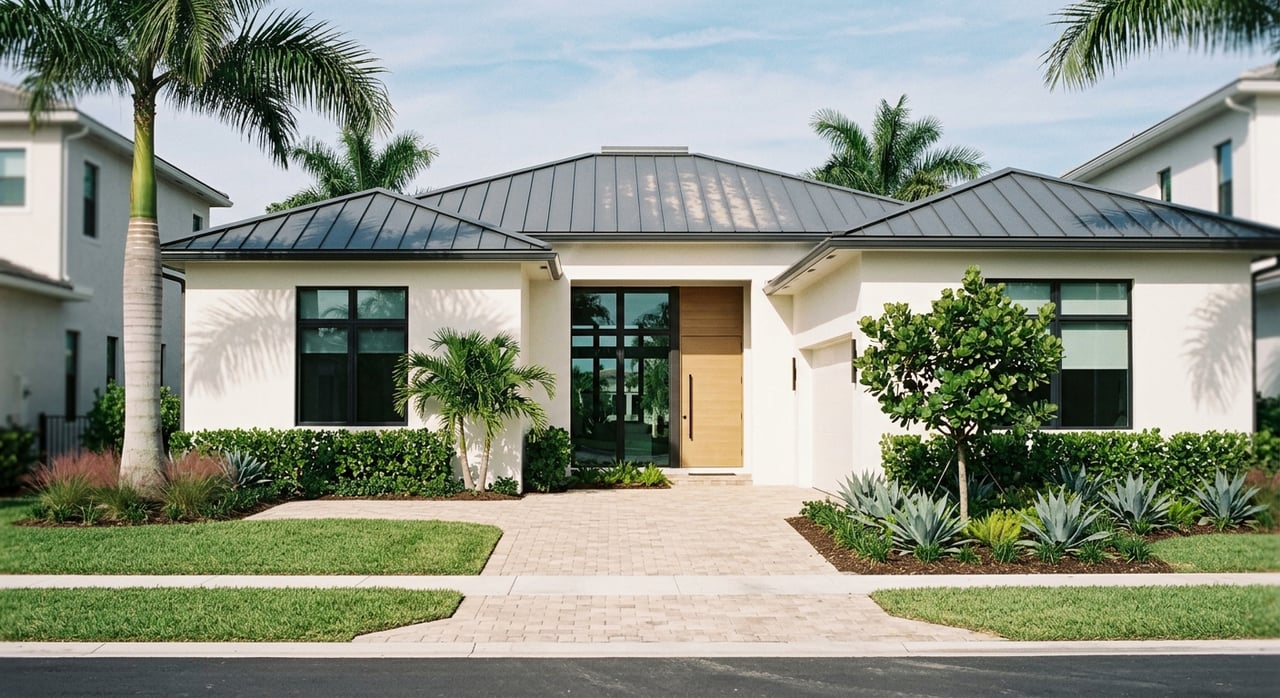
If you have started looking at new construction in North Port, you have probably realized one thing fast: your options are not all the same. In this market, you may be comparing a scattered lot, a townhome, or a home in a large planned community, and each path comes with different costs, timelines, and tradeoffs. The good news is that once you know what to compare, the decision gets much clearer. Let’s dive in.
Why North Port feels different
North Port is not a small, limited new-home market. The city reports more than 94,600 residents, calls itself the largest municipality in Sarasota County, and notes that it remains one of the fastest-growing cities in the country.
That growth matters because North Port still has wide-open undeveloped land and many opportunities for residential communities. For you as a buyer, that means new construction here often involves more variety than in a typical market. You may be weighing raw lots, infill parcels, townhome communities, and master-planned neighborhoods all at once.
Infrastructure is also a major part of the comparison. North Port says many neighborhoods already have city water and sewer, but many parts of the city still do not. That means you should never assume a lot is ready to build on without checking utility availability for that specific parcel.
The city also updated its Unified Land Development Code in 2024, effective October 28, 2024. That code now governs zoning, subdivisions, stormwater, transportation, and utilities, so current rules may be different from what buyers expect based on older information.
Compare the main new-construction options
Scattered lots and build-on-your-lot homes
This option often gives you the most flexibility, but it can also bring the most moving parts. In North Port, the lot itself can shape your cost, timeline, utility setup, and even your design choices.
The city notes that a property receives its physical address only when a building permit is submitted. It also says water and sewer availability must be checked for each parcel. If city service is not available, you should ask whether the home will need a well or septic system before you start comparing floor plans or finishes.
This path can make sense if you want more control over the homesite. Still, it usually requires more due diligence up front.
Planned communities and master-planned neighborhoods
Planned communities can reduce some uncertainty because infrastructure and neighborhood design are handled in advance. In North Port, they can also come with special district costs that need careful review.
The West Villages Improvement District explains that an improvement district is an independent special taxing district that plans, finances, constructs, operates, and maintains infrastructure in planned developments. Annual assessments vary by neighborhood, are paid through the Sarasota County tax bill, and generally cannot be opted out of.
North Port also says Central Parc at North Port is a 207.5-acre redevelopment with a Community Development District. If you are comparing homes in larger developments, district fees should be evaluated just as closely as the purchase price.
Townhomes
Townhomes often offer a more streamlined buying experience, but usually with less design freedom than a detached home. This can be a strong option if you want a newer property with a more standardized setup.
A local example is Palmera Townhomes at Wellen Park, which the city approved as a 37-lot townhome subdivision with private roadways, stormwater, and open space. When comparing townhomes, look beyond square footage and focus on what is included in the base price, what exterior choices are limited, and how association or district costs are handled.
Look past the base price
One of the biggest mistakes buyers make with new construction is comparing only advertised pricing. Two homes with the same base price can have very different total costs by the time you reach closing.
North Port’s posted impact-fee schedule lists residential single-family impact fees at $7,867.01 per dwelling unit. The city’s Utilities Department also lists a single-family potable-water connection cost of $12,300.06 as of November 2025 where city water service is available.
Those figures show why your real comparison should include more than just the builder’s headline number. Closing costs can also vary based on home price, down payment, lender costs, loan type, and location.
Costs to compare side by side
When you evaluate your options, ask for a full cost breakdown that includes:
- Base price
- Lot premium
- Structural options
- Design-center upgrades
- Impact fees
- Utility connection costs where applicable
- Special district assessments or community-related charges
- Estimated closing costs
- Deposit terms and refund conditions
A lower advertised price does not always mean a lower total cost.
Timelines can vary more than you expect
Move-in timing is another area where buyers can get caught off guard. A builder’s estimate may sound simple, but actual timelines depend on the lot, permit process, inspections, and final completion steps.
North Port says inspections are an integral part of each building permit and are scheduled and tracked through Accela. The city also states that current code review uses the 2023 Florida Building Code editions.
That is why it helps to ask very specific questions. Instead of asking only for an estimated completion month, ask how long permit approval usually takes, how inspections are handled, and what typically affects certificate-of-occupancy timing for that builder and that type of property.
Warranty coverage deserves a close read
New construction often gives buyers peace of mind, but warranty terms still vary and should be reviewed carefully. You should always get the warranty details in writing and understand what is covered, what is excluded, and how claims are handled.
Florida’s Department of Business and Professional Regulation says state law now requires builders to provide a mandatory builder warranty for newly constructed homes, effective July 1, 2025. That is an important protection, but it does not mean every warranty works the same way.
Warranty coverage commonly differs by component. Workmanship and materials are often covered for about one year, HVAC, plumbing, and electrical systems often for about two years, and some builders offer up to ten years for major structural defects.
You should also read the dispute-resolution section. Some new-home warranties require mediation or arbitration, which can affect how a claim is handled if a problem comes up later.
North Port checks buyers should not skip
North Port has some local factors that deserve extra attention before you commit to a homesite or community. In this market, utility access and flood exposure are two of the biggest ones.
The city says the Special Flood Hazard Area is primarily near Myakkahatchee Creek, the Myakka River, retention ditches, and canals. It also notes that FEMA’s March 27, 2024 coastal-risk map update changed parts of the city with tidal influence, including portions of Wellen Park and other neighborhoods.
North Port also states that homeowners insurance does not cover flood damage and that flood insurance can have a 30-day waiting period. That makes it important to ask early whether the lot is in a flood zone and what insurance implications may apply.
On the utility side, the city says new construction in locations with available service must connect to city water. Since some parts of North Port still do not have municipal service, this is something you should verify for each parcel rather than assume based on nearby homes.
Questions to ask before signing
A builder’s sales office can be helpful, but you still need clear answers before you commit. Asking the right questions can help you avoid surprises and compare builders on equal footing.
Smart questions for North Port buyers
- Who does the sales representative represent, and how are conflicts handled?
- Is the builder’s lender, title company, or settlement service required, or can you shop around?
- What is included in the base price?
- What counts as an upgrade?
- How are lot premiums and option packages priced?
- Under what conditions is the builder deposit refundable?
- How do you file a warranty claim?
- What items are excluded from coverage?
- Is the lot in a flood zone?
- Is city water available, and is connection required?
- Are there any special district assessments or utility charges?
- Is the builder properly licensed in Florida, and can that license be verified before signing?
These questions may seem simple, but they can reveal major differences between two homes that look similar on paper.
Why independent guidance matters
With new construction, it is easy to assume the model home team handles everything the same way a traditional buyer’s agent would. In reality, representation, lender options, and settlement services can vary from one transaction to another.
That is one reason many buyers want independent guidance when comparing builders and communities. You may also want help reviewing total costs, spotting lot-specific issues, and asking questions that are easy to miss when everything looks polished at the sales center.
In a market like North Port, where you might be deciding between raw land, a planned community, or a townhome project, local guidance can make the process feel much less overwhelming. The goal is not just to find a new home. It is to choose the right option for your budget, timeline, and long-term plans.
If you want a local, relationship-first guide as you compare new construction in North Port, Miki Matrullo is here to help you look past the marketing, understand the details, and make a confident decision.
FAQs
What should you compare when buying new construction in North Port?
- You should compare the full cost, utility availability, flood-zone status, timeline, warranty terms, lot premiums, upgrades, and any district or community-related charges.
What makes North Port new construction different from other markets?
- North Port offers a wide mix of scattered lots, infill parcels, townhomes, and planned communities, and utility access can vary parcel by parcel.
Do all North Port lots have city water and sewer?
- No. North Port says many neighborhoods have city water and sewer, but many parts of the city still do not, so utility availability should be checked for each parcel.
Are special district fees common in North Port planned communities?
- They can be. The city explains that some planned developments use special taxing districts or Community Development District structures, and those annual assessments should be reviewed carefully.
Why is the base price not enough when comparing builders in North Port?
- The base price may not include lot premiums, upgrades, impact fees, utility connection costs, district assessments, and closing costs, all of which can change your true bottom line.
What flood questions should you ask about a North Port new-construction home?
- You should ask whether the lot is in a flood zone, whether recent map changes affect the property, and what flood-insurance implications may apply.
